Sold out
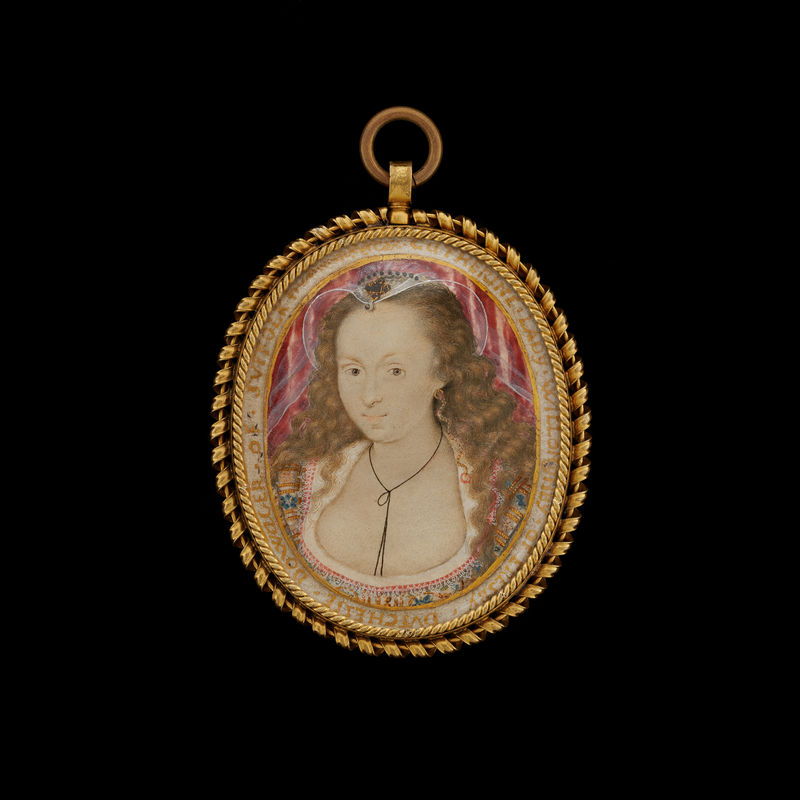
This remarkable miniature by Isaac Oliver depicts an unidentified woman in masquing attire, capturing the highly theatrical culture of the early Jacobean court. Shown in elegant profile against a deep blue ground, the sitter wears loose flowing hair, a flame-coloured drapery, and a revealing costume that exposes the breast – an appearance closely associated with the allegorical and often highly sensual world of court masque. Such entertainments combined music, dance, poetry, and elaborate costume to create spectacles in which elite women could temporarily assume mythological or symbolic identities.
Oliver’s use of the profile format is significant. Derived from antique coins and medals, profile portraiture carried associations of authority, learning, and classical refinement. Oliver appears to have reserved it for particularly elevated or culturally sophisticated sitters, including Anne of Denmark and Prince Henry. Although the identity of the present sitter remains unknown, the miniature suggests a woman deeply connected to the artistic and performative culture surrounding the Stuart court.
The image...
This remarkable miniature by Isaac Oliver depicts an unidentified woman in masquing attire, capturing the highly theatrical culture of the early Jacobean court. Shown in elegant profile against a deep blue ground, the sitter wears loose flowing hair, a flame-coloured drapery, and a revealing costume that exposes the breast – an appearance closely associated with the allegorical and often highly sensual world of court masque. Such entertainments combined music, dance, poetry, and elaborate costume to create spectacles in which elite women could temporarily assume mythological or symbolic identities.
Oliver’s use of the profile format is significant. Derived from antique coins and medals, profile portraiture carried associations of authority, learning, and classical refinement. Oliver appears to have reserved it for particularly elevated or culturally sophisticated sitters, including Anne of Denmark and Prince Henry. Although the identity of the present sitter remains unknown, the miniature suggests a woman deeply connected to the artistic and performative culture surrounding the Stuart court.
The image resonates strongly with descriptions of contemporary masques. Ben Jonson’s Masque of Beauty (1608), for example, describes a character named ‘Splendor’ entering ‘naked breasted’ with ‘bright hair loose flowing’, while eyewitness accounts of aristocratic entertainments similarly describe female masquers with uncovered hair and vividly coloured drapery. Yet the miniature also contains a more intimate and enigmatic detail. Suspended from the sitter’s pearl earring is a lock of hair, traditionally associated with remembrance or mourning. Its inclusion introduces an unexpected note of emotional complexity into an otherwise celebratory image, hinting at personal meanings now lost. Oliver’s extraordinary delicacy of handling – visible in the translucent flesh tones, flowing hair, and luminous costume – heightens the sense of immediacy.