Sold out
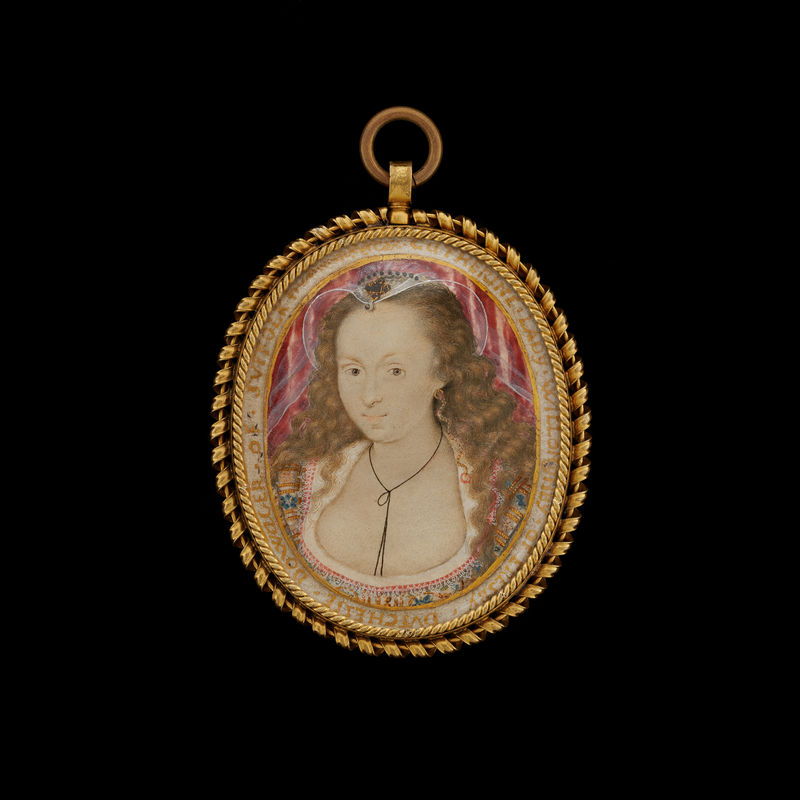
This miniature by Isaac Oliver depicts an unidentified young man, probably a follower of Robert Devereux, 2nd Earl of Essex, at the height of the earl’s political ascendancy in the late 1590s. Though once thought to represent Essex himself, the sitter’s broader features suggest instead one of the many young courtiers and soldiers who aligned themselves with the Queen’s charismatic favourite in the aftermath of the Cadiz expedition of 1596.
Miniatures of this kind functioned as highly personal objects, exchanged between allies, patrons, and courtiers. Their small scale encouraged close viewing, while their exquisite execution projected refinement and status. Oliver’s technical brilliance is particularly evident here in the minute rendering of the sitter’s beard, eyelashes, and lace collar, details painted with extraordinary precision. Such works occupied a space between portrait, political statement, and token of allegiance.
Seen in this context, the miniature offers more than a likeness of an unknown man. It captures a moment when Essex’s favour appeared secure...
This miniature by Isaac Oliver depicts an unidentified young man, probably a follower of Robert Devereux, 2nd Earl of Essex, at the height of the earl’s political ascendancy in the late 1590s. Though once thought to represent Essex himself, the sitter’s broader features suggest instead one of the many young courtiers and soldiers who aligned themselves with the Queen’s charismatic favourite in the aftermath of the Cadiz expedition of 1596.
Miniatures of this kind functioned as highly personal objects, exchanged between allies, patrons, and courtiers. Their small scale encouraged close viewing, while their exquisite execution projected refinement and status. Oliver’s technical brilliance is particularly evident here in the minute rendering of the sitter’s beard, eyelashes, and lace collar, details painted with extraordinary precision. Such works occupied a space between portrait, political statement, and token of allegiance.
Seen in this context, the miniature offers more than a likeness of an unknown man. It captures a moment when Essex’s favour appeared secure and identification with his circle represented a meaningful political and social statement. With the earl’s dramatic fall and execution for treason in 1601 still unforeseen, images such as this reflect the ambitions, loyalties, and shifting fortunes that shaped the final years of Elizabeth I’s court.