
Sold out
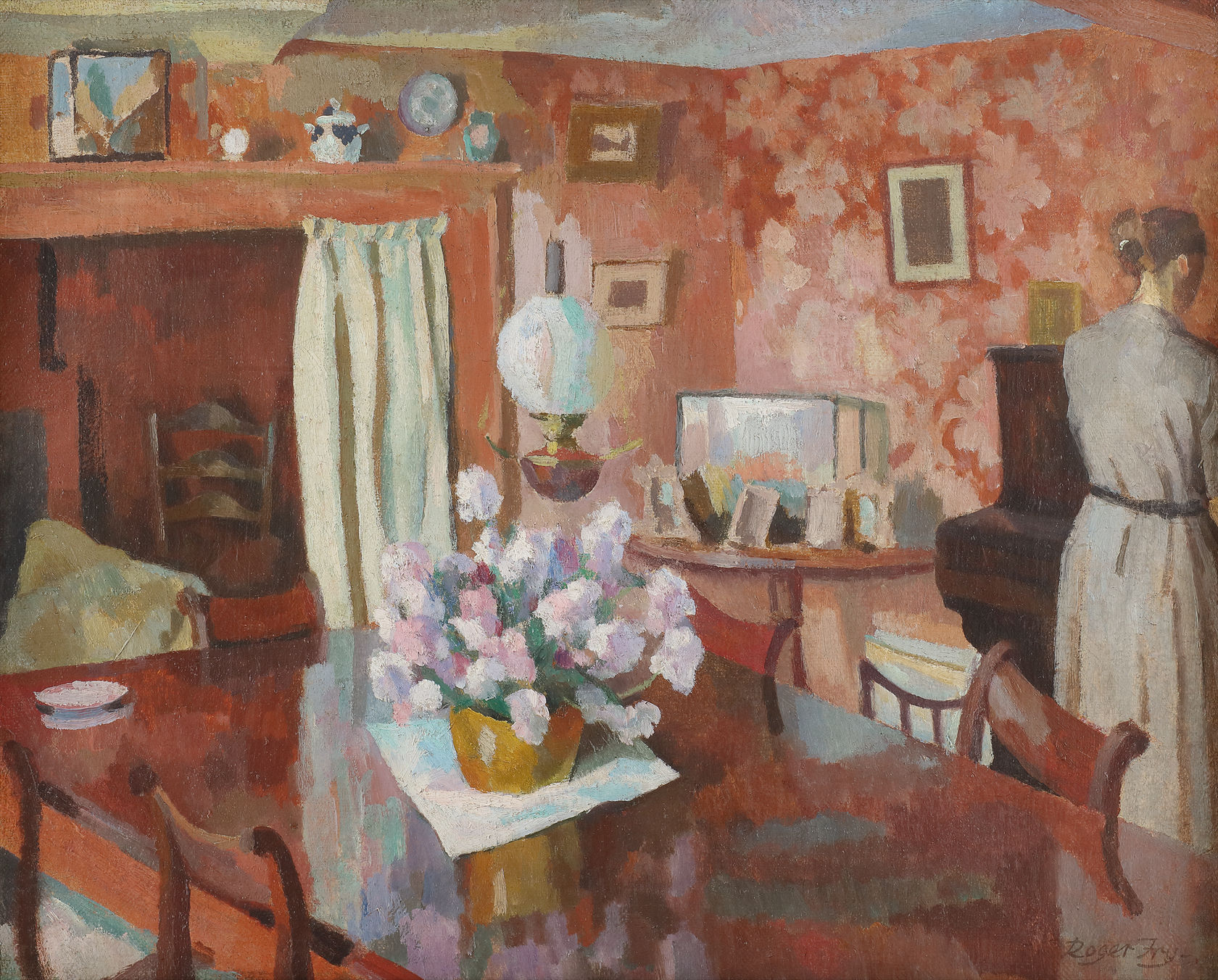
This charming interior scene by Roger Fry has recently been discovered to be the drawing room of Bo Peep Farm in Sussex.
It is understood that Fry stayed at Bo Peep intermittently from 1915 until late 1919, using it as a base from which to visit the occupants of Charleston, the home of Bloomsbury Group members Vanessa Bell and Duncan Grant. This work is believed to have been painted around 1918 when Fry was staying at the farmhouse with his two children whilst attempting to win back the romantic affections of Bell, a campaign that ultimately failed and nearly ruined their friendship. In a letter to Philippa Strachey after this futile stay, Fry wrote about Bell visiting him at his home Durbins in Guilford saying ‘it will be nice to see her quietly after that nightmare of a time at Bo Peep which nearly ended in a complete smash up of our friendship’.[1]
In Interior at...
This charming interior scene by Roger Fry has recently been discovered to be the drawing room of Bo Peep Farm in Sussex.
It is understood that Fry stayed at Bo Peep intermittently from 1915 until late 1919, using it as a base from which to visit the occupants of Charleston, the home of Bloomsbury Group members Vanessa Bell and Duncan Grant. This work is believed to have been painted around 1918 when Fry was staying at the farmhouse with his two children whilst attempting to win back the romantic affections of Bell, a campaign that ultimately failed and nearly ruined their friendship. In a letter to Philippa Strachey after this futile stay, Fry wrote about Bell visiting him at his home Durbins in Guilford saying ‘it will be nice to see her quietly after that nightmare of a time at Bo Peep which nearly ended in a complete smash up of our friendship’.[1]
In Interior at Bo Peep House there is no sign of the tensions described by Fry in his letter instead, the intricacies of the interior take priority - creating a notably tranquil and uplifting scene. A gleaming, highly polished table juts out into the room reflecting the colours and patterns of this domestic scene. A woman stands, head bend, facing a piano and at the centre of the composition a bowl of carefully arranged hyacinths sits denoting that the work was most likely painted in between the months of March-April. These elements and the assortment of decorations that fill the room are framed by the bold, highly pattered red and pink wallpaper that lines the space which Fry gives precedence to in a possible reference to the colourful designs of Omega.
This is a particularly fascinating work as interior design was to Fry a key component in the way people lived. In 1913, along with artists Bell and Grant, he opened the Omega Workshops that gave a physical expression to the Bloomsbury Group ethos that expanded the boundaries between art and life. However, Omega shut down in 1919 but in the years it operated it demonstrated Fry’s keen eye for design and the modern way of life it could foster.
[1] Roger Fry Letters, Denys Sutton 1913-1934, p.433.