Enquire
On Edward Burra and William Chappell
An Artistic Friendship
A long read by Intern Charlie Cluff
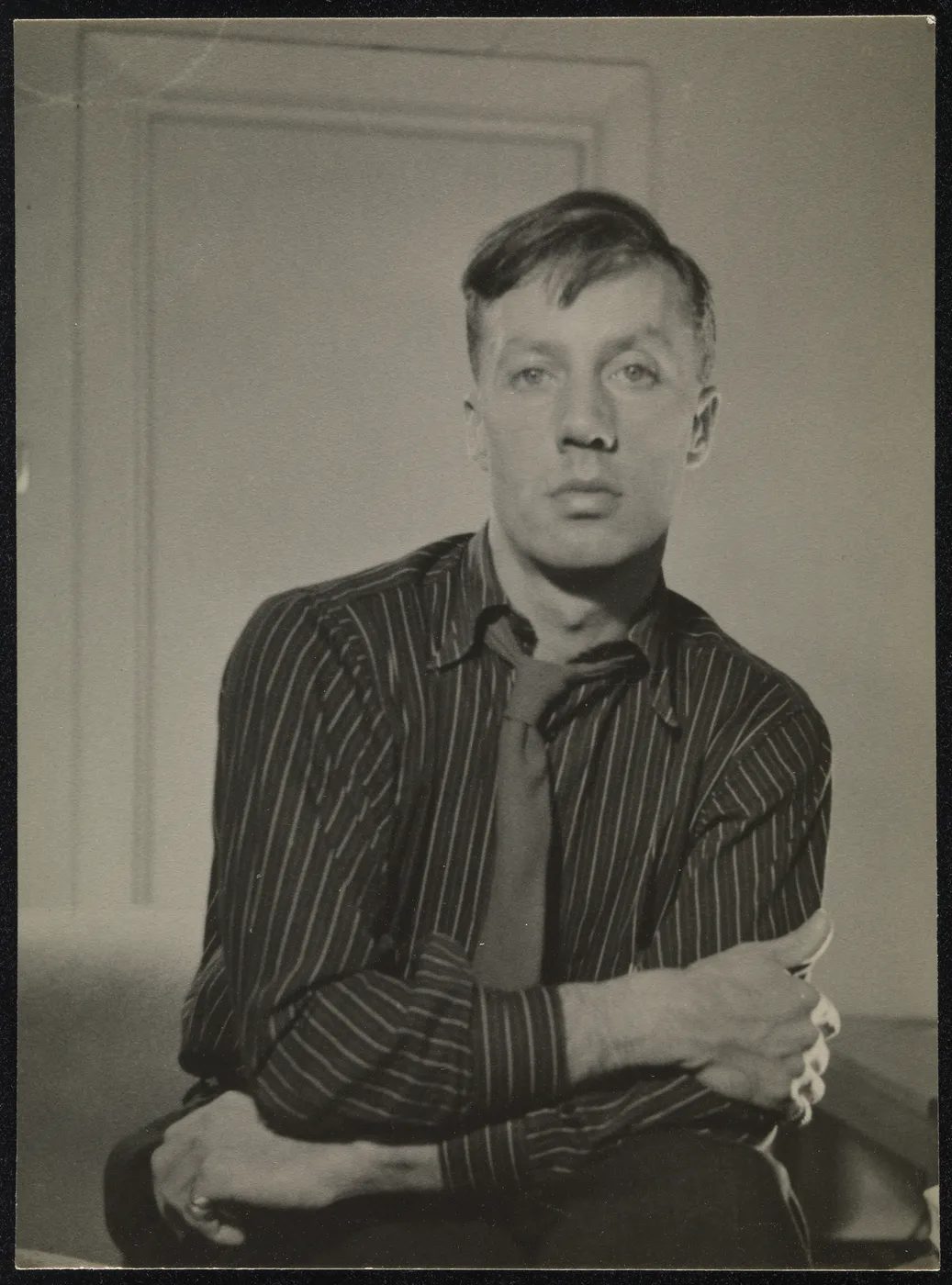
Edward Burra and William (‘Billy’) Chappell shared an intensely close friendship, maintaining itself with undying constancy from the moment they first encountered one another at the Chelsea Art School in 1921. Chappell arrived at the incredibly young age of fourteen; he was two years Burra's junior. Both were driven observant spirits who had upbringings of an uneasy and tangled nature. The respective personal hardships endured by the two, although different, helped them both proliferate flourishing careers. And within this well formed and affecting companionship Chappell would be one of the few people that Burra would allow (as much as he was able to), to get to know the genuine, witty, sardonic and even empathetic self.
The two young men not only shared a vast number of formative experiences through their schooling, but also a clear unison of enjoyment. In their school days this meant being avid spectators of the cinema and the ballets which, in the 1920s, carried an ever growing atmosphere of developmental excitement.[1] Burra was especially drawn to cinema. Chappell would even jokingly describe him as an ‘addict’ when it came to attending the picture houses on the Kings road.[2] Shlock horrors were among Burra’s favourites, and this is present when regarding the close and personal nature of some of Burra’s portraiture.[3] It even influenced the manner in which he conveyed the thematic dramatisation applied to some of his unwitting sitters.[4] Chappell, at the same time attending the many ballets of the 1920s, would likely have begun, at this period, to ascertain his own penchant for design and his skill for building aesthetic portals in which an almost mystical display was explicitly illuminated (note for example a watercolour and gouache design for the ballet Swan lake completed by Chappell in 1947).[5] Chappell actually wouldn't begin performing dance until the relatively late age of seventeen, being talked into it by Marie Rambert.[6] It wasn't long after that that Chappell would have his first professional performance in the Purcell Opera’s revival of the Fairy Queen.[7]
With the two together attending these many events with such pleasure, they really did democratise the very essence of delight and joy between themselves. This is not to say their friendship was nothing more than a dreamy array of aggregable sentiment. There were also complications, as are to be expected in friendships that possess any longevity or depth. In one sense competitiveness even made itself a whisper in the background. This can be seen in the initial praises Chappell received as a designer as well as a dancer, something which seemed to somewhat bother Burra.[8] Yet Burra was also always quick to splash cold water on any potential growth of arrogance he perceived, as evidenced by the undertones of a humorous and sarcastic fan letter he later wrote to Chappell where such aforementioned undertones are gathered.[9]
Dear Mr Chappell
Nite after nite I have admired yr legs they certainly r yr trump card. When you come on as a nun I can hardly stay still and in ‘Vitriol suit’ by that wonderful Frederick Ashton you are a dream especially wen yr shoes fly off showing a beautiful foot.
May I hope for a photo?? Most other stars (Gertie Gitana, Scot and Waley etc) have sent me ones believe me you do not guess at what you bring to my life. Thanking you in anticipation from
Your ‘shadow fan’
P.S. I am an other & sent one of my little booklets for even dancers have kiddies.[10]
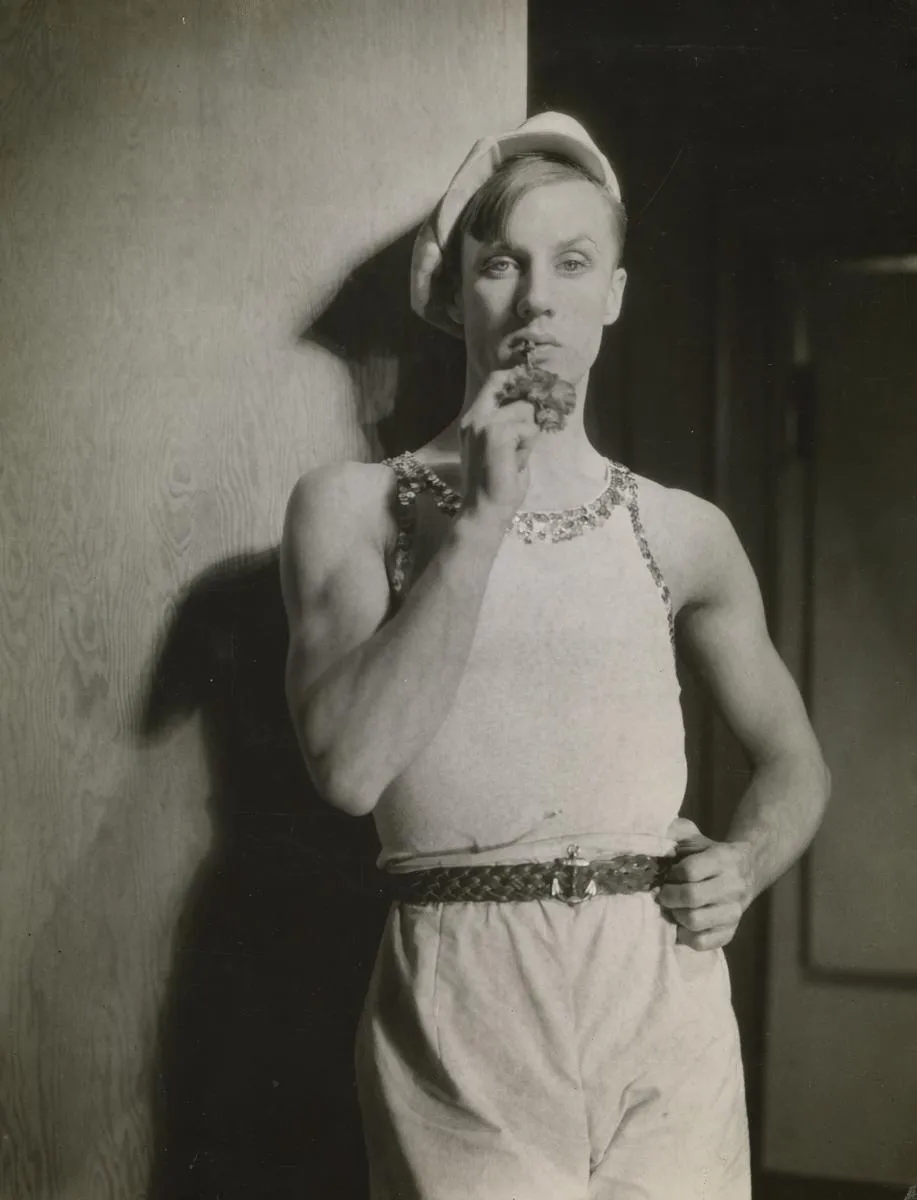
It's also almost as if his compliments were glued together with an implicit message of him alluding to Chappell to stick to his own lane and keep with the performance of dancing which was as an endeavour, literally antithetic to Burra’s capabilities, rather than attempting to design as well. However, design was something Burra and Chappel both would respectively prove to be capable of throughout their careers (especially in Chappel’s case); but that is not to say they didn't work successfully together. In 1921 in the Frederick Ashton directed ballet Rio Grande Burra and Chappell’s respective roles of designer and dancer would help demonstrate an elevation of one another’s talents.[11] Burra’s design for Chappell as the Creole boy not only articulated Chappell’s strengths as a performer, but Chappell’s embodiment of the costume in performance simultaneously revealed Edwards’s capacity to construct a ‘heightened reality’ through a ‘physical theatrical conveyance’, thus the two in their own rights and together could create something truly wonderful.[12]
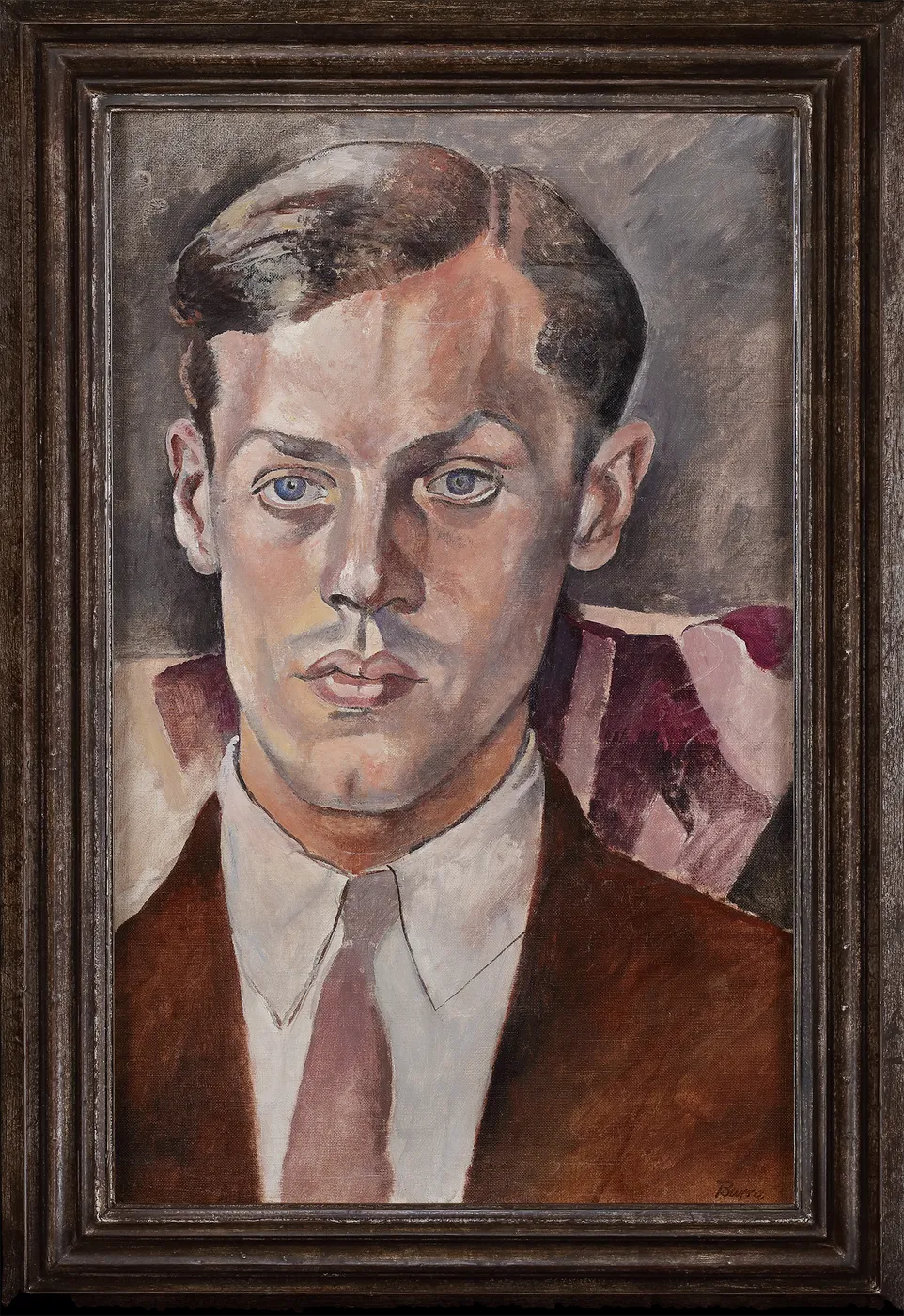
Both were in some way positioned in the peripheries of the comfortable Edwardian middle-class society, from the outside looking in. Chappell’s case was due to his mother’s unconventional break from her family and then later financial troubles, causing a vast and noticeable split between himself and the family members who were seemingly so close, yet simultaneously so far. An excerpt from a letter detailing an early interaction with Chappell’s cousin concurs. When describing what impression he formed after being told of all his relatives’ sporting and academic achievements at Eton, he stated that he felt like “quite the poor wee gutter child.”[13] Of course, Burra had never experienced a separation of circumstances in such a manner as Chappell had, but his case was not much different; he too remained isolated from the reassuring nearness of an upper middle class existence. It was his inability to travel the well-trodden route of public school followed by Oxbridge, caused by his invalidity, which held him outside that same manufactured context.[14]
A further aspect shared by the two was that they were both brought up in a heavily matriarchal environment. Burra’s excruciating illness (of rheumatic arthritis) led to him being tended to by an army of nursing figures who cared for and adored him hugely.[15] Whether it was his mother, his sisters, or his nanny's, his initial bonds were far more impacted by the woman in his life than it was by the men. His father, although supportive of Edward’s wishes, was far more ‘benign’ and silent.[16] In Chappell’s case he was abandoned by his father altogether; his mother made a living by writing an immense number of articles primarily regarding the fashion world of London, but also whatever else came her way.[17] As a result, Chappell not only formed a deep appreciation and respect for his mother’s difficulties and subsequent diligence, but also likely felt a suspicion regarding the nature of the male role when tasked as a figure of consistency or comfort.
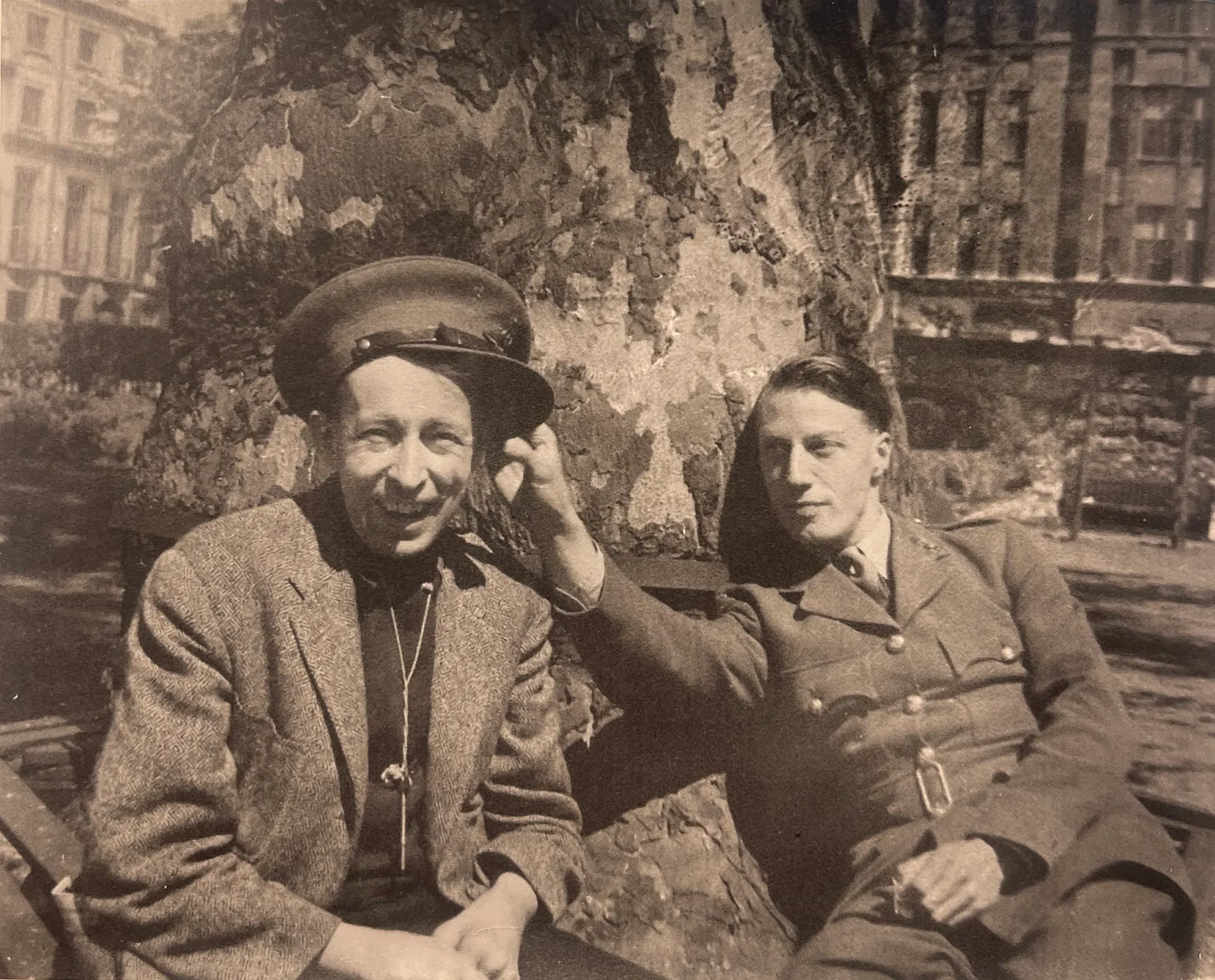
They shared many important similarities, yet at the same time their differences would also act as a tie which held the two together as they found one another mutually fascinating.[18] Chappell was a link for Burra which helped him to be more connected to the world that stimulated his artistic disposition. This was the world of a more subversive, complex nature, whereby the safety and certainty of being a member of the Edwardian upper middle class was inverted, and the tougher realities of financial difficulty and personal invisibility were at play; a world which Chappell knew only too well, and Burra was intending to get to know better through his artistic endeavours. This curiosity for the downtrodden and rougher of actualities, would help define some of Burra’s most significant works. I think Chappell’s fascination with Burra was formulated in a sense by Burra’s toughness and inventiveness which helped to medicate the extremities of Chappell's acute sense of 'declasse' origins and thus his early lack of sense of self.[19] I think one can imagine that Edward appeared as an older figure with such an energetic sense of what pleased him and what didn't that being in such close proximity to that would have helped steady Chappell's seemingly shaky and introspective narrative.
Both young men had a disposition to seek out the seedy and to enjoy the thoroughly ‘un english exuberance’ emanating in some of the hot spots of the continent.[20] So as such they went on several trips together. Traveling for any artist who was a modernist was obviously a very important fact in their artistic development.[21] Thus, Burra would begin his independent travel adventures at the very young age of 22.[22] Burra and his sister Anne both made a fierce point of being very secretive as to where they were going. Making it abundantly clear to their loving parents that there was no point in asking after either of them as they were going to go where they pleased.[23] This took on a far more extreme manner with Burra’s escapades; If Burra left the house they wouldn't know if he was simply dashing off to Rye or was off on a boat across the channel for an adventure lasting three months.[24] Travel would also take its positive toll on the trajectory of Chappell’s dance career; Paris in this regard being of particular importance.
Although Burra was not poor he was still very careful about his expenditures.[25] Chappell however was not in his youth prosperous so uncomfortable and vast adventures via third class trains was the means to go.[26] And this would bring them initially to Cassis and then Marseilles. Cassis lacked the predetermined conceptions of vitality and uncertainty in which both individuals were looking forward to. Instead it was to them a more ‘bourgeois pool’ of casual tourism and mild excitement.[27] As Burra recorded while spending a few days there with Chappell.
‘I stares into every window hoping for a thrill but all I see is little Georgette having her nappy changed by loving mothers hands.’[28]
Yet what Cassis lacked in excitement Marseille more than made up for. It matched the two boys' exciting premonitions of what the forgetful world of exhilaration in mainland Europe would be, as evidenced by an imaginative depiction of the South of France completed by Burra a few years before either of them had even seen it.[29] It was titled The Taverna (1924).[30] What Marseille had for the two young men was the vast variety of eclectic individuals thriving in a place where disorder ruled the unruly setting. All this was accentuated by the observations made in the cafes and haunts which dotted around the narrow stretch of the city’s chaotic and thriving landscape.
The continuation of Burra and Chappell's travels would find them placed together in Paris, which at this time seemed to be the epicentre of all the important necessities which London lacked. A queer friendly haven where artistic dogma vanished and where fresh ideas were to be found surrounding every available circumstance. They both travelled to meet a mutual friend Sir Frederick Ashton, who was living at that time a wild existence marked by the byproducts of recently joining Ida Rubenstein's ballet company; (leaving him destitute but still with enjoyment). In October of 1928 after a separate holiday in Toulon, Burra would accompany Chappell to Paris whereby Chappell would get himself accepted by Bronislava Ninjinska on the behalf of the monumentally eccentric previously mentioned character Ida. This was a charming development for Burra, as he delighted in witnessing the “fraying tempers” and electricity of the atmosphere generated by such a company’s performances.[31] Edward was thrilled with Chappell’s development as a dancer; and was as such thoroughly supportive.
Although the group in which Edward would find himself bonded almost indefinitely was a ‘formidably self-sufficient’ clan consisting of many colourful and self-confident characters, such as Barbara Ker-Seymer, Nancy Cunard, and Clover Pritchard, it seems very likely that, out of all the intimate friendships maintained with his peers, bar his sister Anne and Barbara Ker-Seymer, theirs was the strongest.[32] However, even when considering the undeniably close nature of their amity, Burra would still place an unsurpassable barrier, which was denied to almost no one, when regarding his private fears. This is made evident when looking at the correspondence regarding the untimely and unfortunate nature of Burra’s younger sister Betsey’s passing. It was mentioned in a brief and fleeting conveyance, which was quickly followed by a rapid subject change regarding the on goings in the Nashe’s’ home in Sussex.[33]
‘We are having an awful time as Betsy developed a headache last Sunday and on last Sunday week a specialist was sent for and it appears she has meningitis and apparently can only live a fortnight I can hardly write it mother is in a dreadful state and has fits of sobbing. Such merry times have been going on at Thornsdale what with dashing nude into the river and Brenda Dean Paul walking about in Lido trowsers the whole village is an uproar.’[34]
Despite this guarded mention, the death of Burra’s sister affected him tremendously. Given the combination of his intensely good memory and his condition; Burra would have had a keenly vivid sense of mortality while also having a bleak inclination to remember the most melancholic of details. Such as the memory he had of his Grandmother's coffin taking a profusely long time to be lowered.[35] Or in Betsey’s case spending every last possible segment of time with her on the eve of her passing, taking her in with his eyes.[36] Being literally unable to forget such things and inhabiting a world whereby such aforementioned images would stay with him until his own death, must have felt intensely lonely. Therefore, it is very likely he worried that to be open about his deep feelings was to fall into a trap of misunderstanding. He seemed to interpret his rapports as devoid of depth and held together by a resin consisting of a mixture of wit, humour, and gossip.[37] This fear that his friendships were too shallow to house genuine tragedy was illustrative of the lack of trust which appeared to define the majority of Burra’s companionships. Yet, it is Chappell’s interpretation of this aforementioned detail which helps negate a complete lugubriousness. Within the commentary of the anthology of letters titled Well Dearie!, edited by Chappell himself, it is shown that he did, above all else, understand the reasons as to why Burra was so private, describing the “tug of war” which was acting as a continuous, internal, reverberation between his Edwardian sensibilities and his desire to break away into the Bohemian prism.[38] It was almost as if there was a constant battle within Burra’s soul between shouting out as loudly as one could and remaining completely silent about the less amiable realities which stalked his life, such as personal solitude, illness, or the grief of his sister’s death. Thus, Chappell understood that his friend was a character ‘thick with contradictions,’ knowing full well that even though Burra was outside the conventional mould, he was never internally able to fully abandon it, a restraint that owed much to the embedded stoicism of his early and complicated Edwardian development and the immense pain of his physical deterioration.[39]
I think what one can take away from this all is that despite both of their thorough emotional nuances and the underlying distance which never quite resolved itself, they both deeply enjoyed one another’s company and helped to establish and even in a sense codify one another’s narratives and journeys. Thus their friendship was truly a wonderful thing.
[1] Stevenson, Twentieth Century Eye, p. 168.
[2] Stevenson, Twentieth Century Eye, p. 44.
[3] Never tell anybody anything: The Life and Art of Edward Burra, documentary.
[4] Never tell anybody anything: The Life and Art of Edward Burra, documentary.
[5] Roseberrys Auction House Lot essay find attached here (https://www.roseberys.co.uk/a0605-lot-549075-william-chappell-british-1907-94-swan-lake-decor-for act-ii )
[6] Stevenson, Twentieth Century Eye, p. 166.
[7] Stevenson, Twentieth Century Eye, p. 166.
[8] Stevenson, Twentieth Century Eye, Ballet, p. 178.
[9] Stevenson, Twentieth Century Eye, Ballet, p. 179.
[10] Stevenson, Twentieth Century Eye, p. 177.
[11] Stevenson, Twentieth Century Eye, p. 179.
[12] Stevenson, Twentieth Century Eye, p. 179.
[13] Stevenson, Twentieth Century Eye, p. 40.
[14] Stevenson, Twentieth Century Eye, p. 18.
[15] Stevenson, Twentieth Century Eye, p. 43.
[16] Stevenson, Twentieth Century Eye, p. 20.
[17] Stevenson, Twentieth Century Eye, p. 39.
[18] Stevenson, Twentieth Century Eye, p. 40.
[19] Stevenson, Twentieth Century Eye, p. 40.
[20] Never tell anybody anything: The Life and Art of Edward Burra, documentary.
[21] Never tell anybody anything: The Life and Art of Edward Burra, documentary.
[22] Stevenson, Twentieth Century Eye, p. 151.
[23] Stevenson, Twentieth Century Eye, p. 19.
[24] Stevenson, Twentieth Century Eye, p. 19.
[25] Stevenson, Twentieth Century Eye, p. 129.
[26] Stevenson, Twentieth Century Eye, p. 152.
[27] Stevenson, Twentieth Century Eye, p. 152.
[28] Chappell, Well Dearie! The Letters Of Edward Burra, p. 37.
[29] Stevenson, Twentieth Century Eye, p. 155.
[30] Stevenson, Twentieth Century Eye, p. 155.
[31] Stevenson, Twentieth Century Eye, p. 168.
[32] Chappell, Well Dearie! The Letters Of Edward Burra, p. 15.
[33] Chappell, Well Dearie! The Letters Of Edward Burra, p. 69.
[34] Chappell, Well Dearie! The Letters Of Edward Burra, p. 69.
[35] Never tell anybody anything: The Life and Art of Edward Burra, documentary.
[36] Never tell anybody anything: The Life and Art of Edward Burra, documentary.
[37] Chappell, Well Dearie! The Letters Of Edward Burra, p. 69.
[38] Chappell, Well Dearie! The Letters Of Edward Burra, p. 68.
[39] Chappell, Well Dearie! The Letters Of Edward Burra, p. 69.