
Enquire
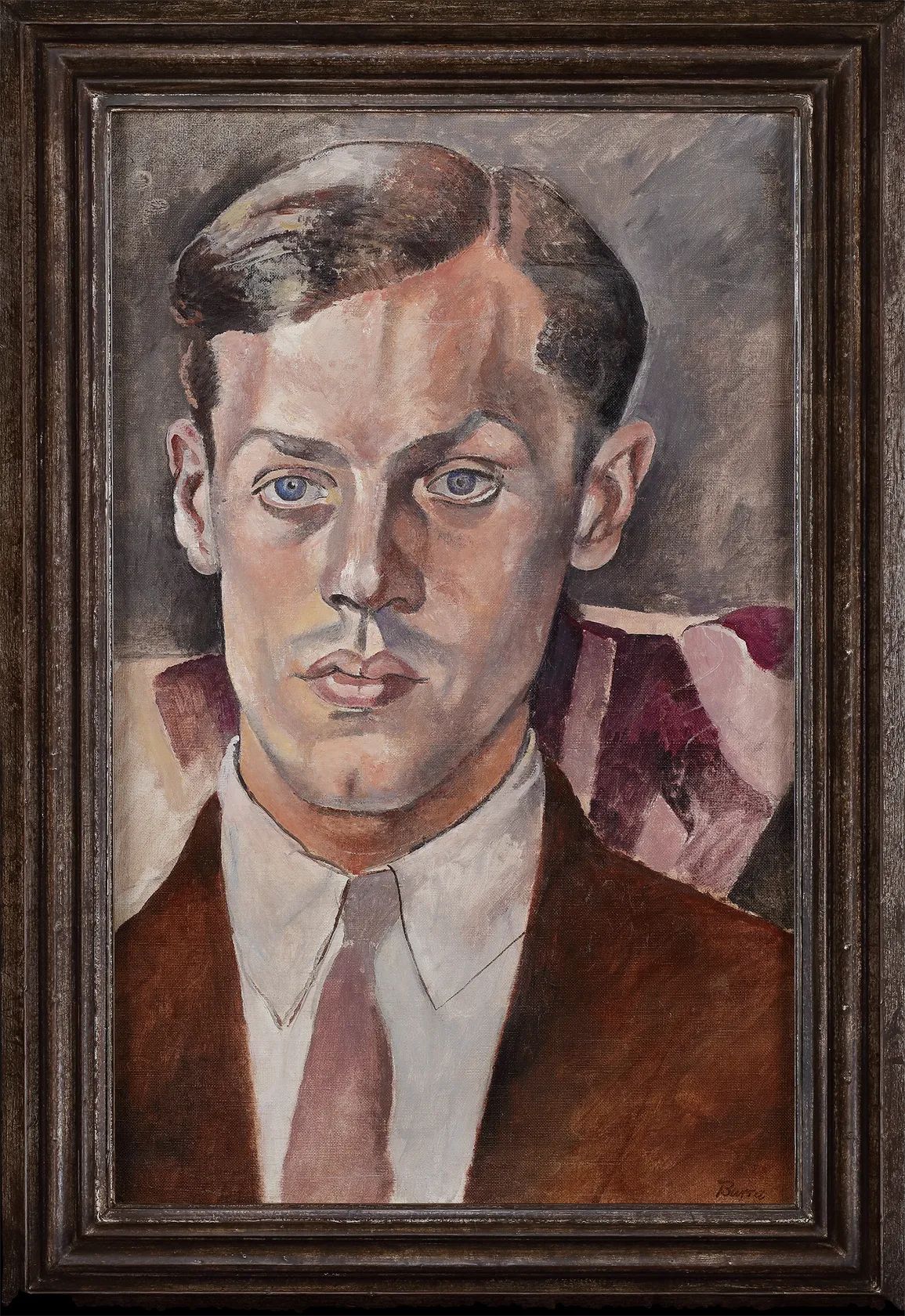
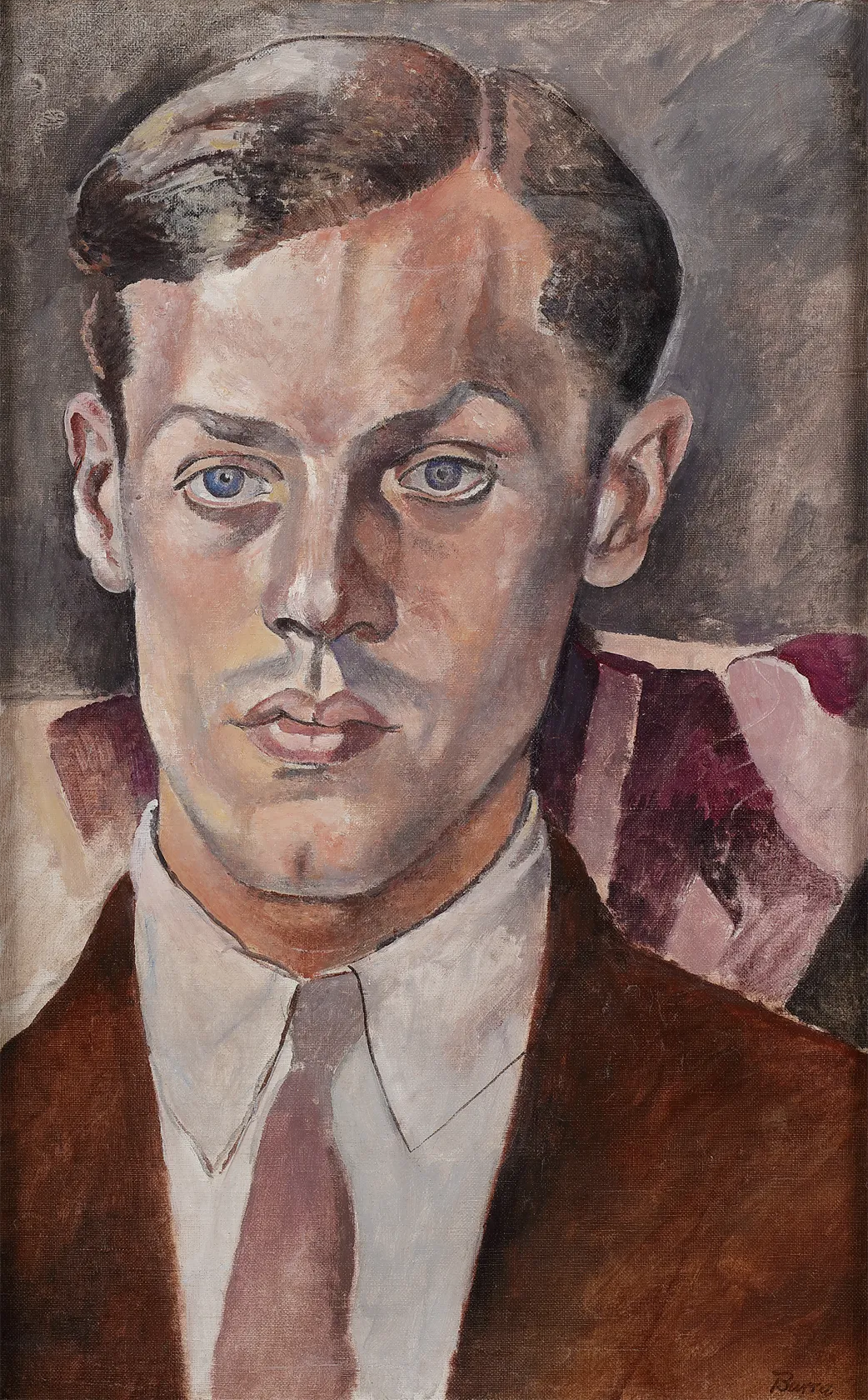
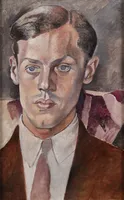
Edward Burra’s Portrait of William Chappell is a rare example of his work in oil rather than the watercolour medium for which he is celebrated. Painted in Paris during the formative years of Burra’s early career, it was gifted directly to Chappell and remained in his family until 2008.[1]
Burra and William ‘Billy’ Chappell first met while studying at Chelsea Polytechnic in the mid-1920s. Their friendship quickly deepened into a close creative and social companionship that endured for decades. The pair travelled widely together, most notably to Paris, which exerted a profound influence on Burra’s developing artistic vision. Throughout the late 1920s, they returned repeatedly to the French capital and the Mediterranean ports of the south, immersing themselves in the vitality of urban nightlife – cinemas, circuses, music halls and cafés – environments that populated Burra’s vivid depictions of modern life.
The intensity of their friendship is well attested in the lively correspondence that passed between them over many years....
Edward Burra’s Portrait of William Chappell is a rare example of his work in oil rather than the watercolour medium for which he is celebrated. Painted in Paris during the formative years of Burra’s early career, it was gifted directly to Chappell and remained in his family until 2008.[1]
Burra and William ‘Billy’ Chappell first met while studying at Chelsea Polytechnic in the mid-1920s. Their friendship quickly deepened into a close creative and social companionship that endured for decades. The pair travelled widely together, most notably to Paris, which exerted a profound influence on Burra’s developing artistic vision. Throughout the late 1920s, they returned repeatedly to the French capital and the Mediterranean ports of the south, immersing themselves in the vitality of urban nightlife – cinemas, circuses, music halls and cafés – environments that populated Burra’s vivid depictions of modern life.
The intensity of their friendship is well attested in the lively correspondence that passed between them over many years. Burra’s letters reveal a tone of affectionate irreverence, addressing Chappell by a succession of playful nicknames including “the Marquis C”, “our old tart of a Chappell”, and the theatrical “Fishnet Annie”.[2]
Chappell is depicted here in a tightly framed composition, his gaze directed forward with a cool, steady intensity. Burra has concentrated his painterly attention on the sitter’s face, modelling its planes with careful tonal transitions that emphasise the strong geometry of the jaw and cheekbones. The eyes, rendered in a striking pale blue, provide the focal point of the composition, lending the portrait a sense of psychological presence. By contrast, the clothing and background are treated more loosely, the brushwork is less descriptive, allowing the sitter’s features to dominate the canvas.
Although formally composed, the painting retains a quiet immediacy, suggesting the familiarity that existed between artist and sitter. The portrait captures Chappell at a moment of youthful promise. Following his student years, he pursued a career in dance, performing in both cabaret and classical ballet before later turning to stage design, where he achieved considerable success, most notably designing productions such as Swan Lake at the London Coliseum in 1947. Yet here he appears simply as Burra’s friend, composed, self-possessed, and quietly charismatic.
[1] Andrew Causey, (1985) Edward Burra: Complete Catalogue. Oxford: Phaidon, p. 22.
[2] Simon Martin, (2011) Edward Burra. London: Lund Humphries, p. 22.