





Sold out
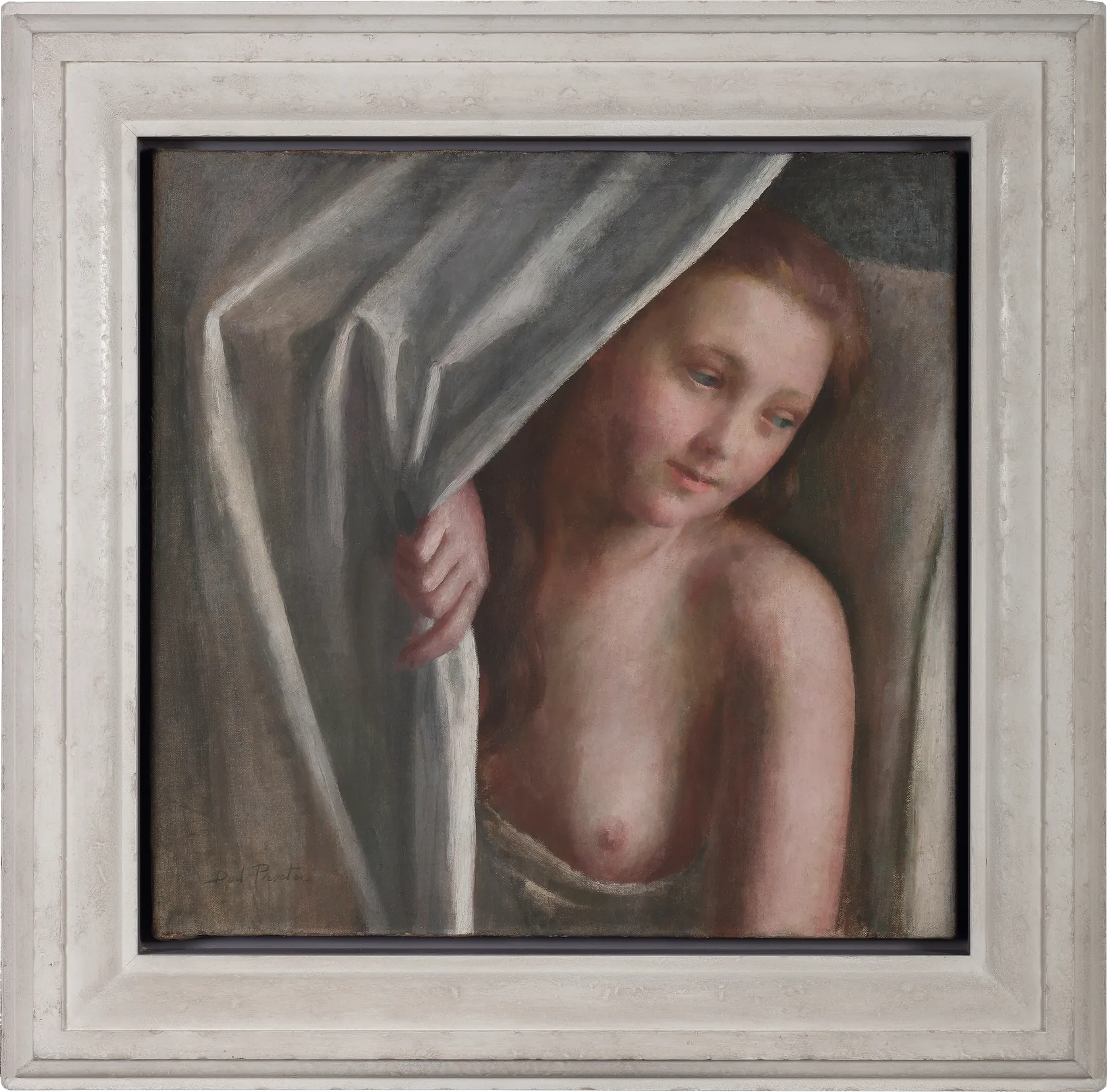
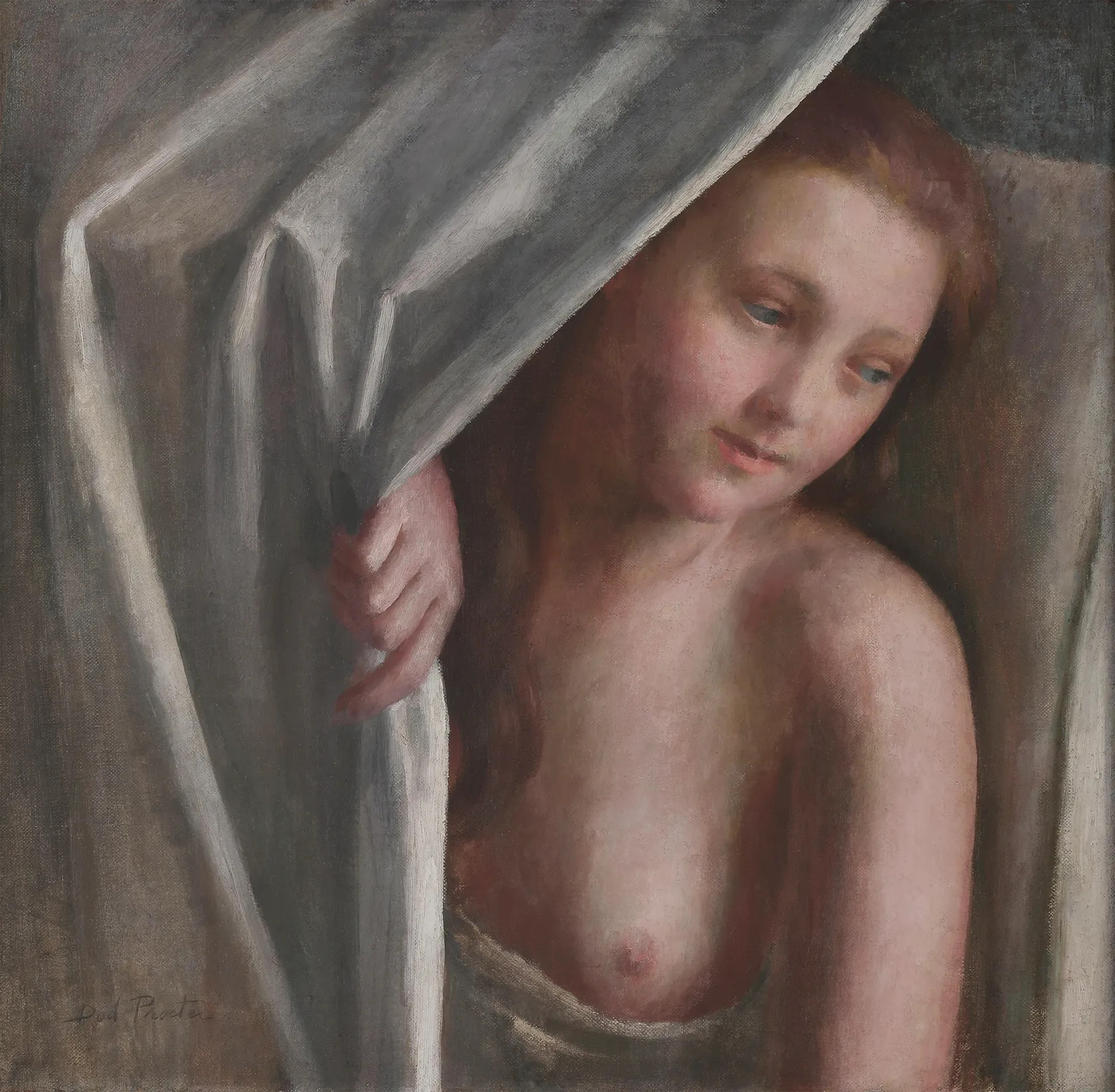
Dod Procter was a leading figure of interwar British art, renowned for her monumental nudes and introspective portraits which fused Newlyn naturalism with classical modernism. This sensitive work belongs to a remarkable sequence of figure paintings of the same model, now known to be called Gwendoline, produced at the height of Procter’s fame.
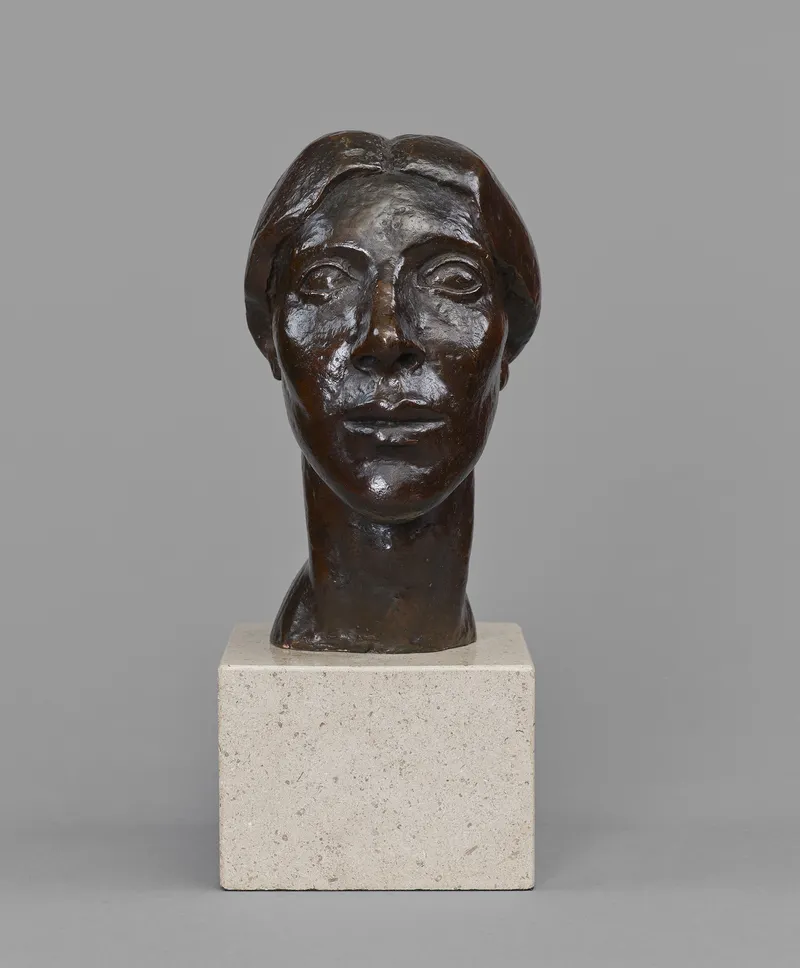
This sitter appears across multiple works of this period, including Virginal (c.1928–29), Summer Bed Time (c.1929), and later head studies such as The Pearl Necklace (c.1932-41). Such repetition is characteristic of Procter’s practice during these years: she returned to a chosen model over sustained campaigns, refining pose and mood. The present work stages the figure within a private, curtained composition. Drawn aside by the sitter’s hand, heavy drapery creates a shallow, theatrical space. Procter’s treatment of flesh is cool and silvery, built up through densely worked, subtly modulated layers of paint – a manner for which she became well known – creating a weighty, sculptural presence that...
Dod Procter was a leading figure of interwar British art, renowned for her monumental nudes and introspective portraits which fused Newlyn naturalism with classical modernism. This sensitive work belongs to a remarkable sequence of figure paintings of the same model, now known to be called Gwendoline, produced at the height of Procter’s fame.
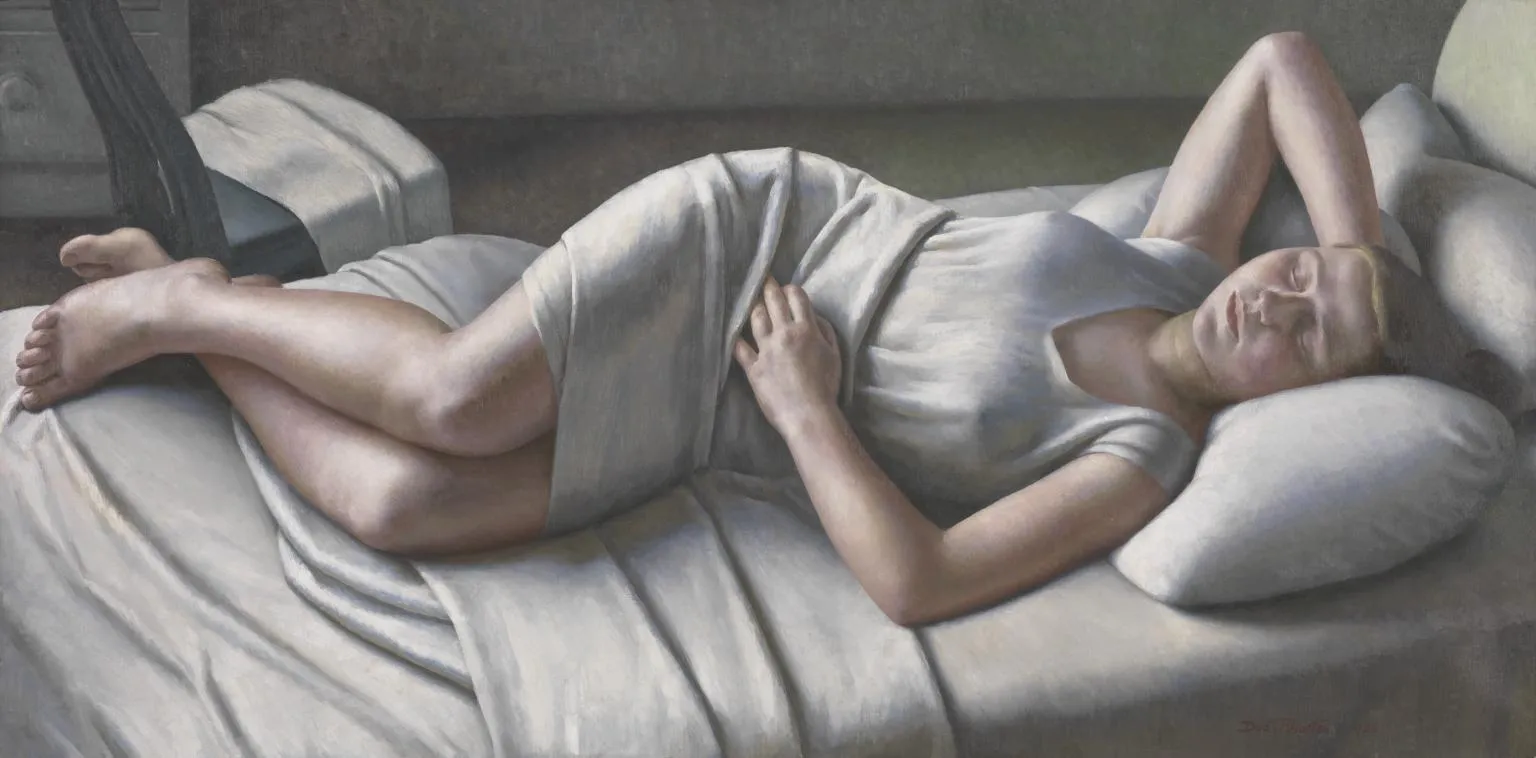
This sitter appears across multiple works of this period, including Virginal (c.1928–29), Summer Bed Time (c.1929), and later head studies such as The Pearl Necklace (c.1932-41). Such repetition is characteristic of Procter’s practice during these years: she returned to a chosen model over sustained campaigns, refining pose and mood. The present work stages the figure within a private, curtained composition. Drawn aside by the sitter’s hand, heavy drapery creates a shallow, theatrical space. Procter’s treatment of flesh is cool and silvery, built up through densely worked, subtly modulated layers of paint – a manner for which she became well known – creating a weighty, sculptural presence that lends her figures a sense of solidity. The classical evocation of curtain and drapery links the work to her most celebrated painting, Morning [fig. 1].
Exhibited at the Royal Academy in 1927, Morning was voted ‘Picture of the Year’ and purchased for the nation by the Daily Mail, generating extraordinary publicity and establishing Procter in the words later used by the National Portrait Gallery, as ‘the most talked about living artist in Britain’.[1] The painting subsequently toured Britain for two years following its exhibition in New York, cementing her international reputation. It was within this atmosphere of acclaim, and intense public scrutiny, that Procter continued to explore the theme of the solitary female nude.
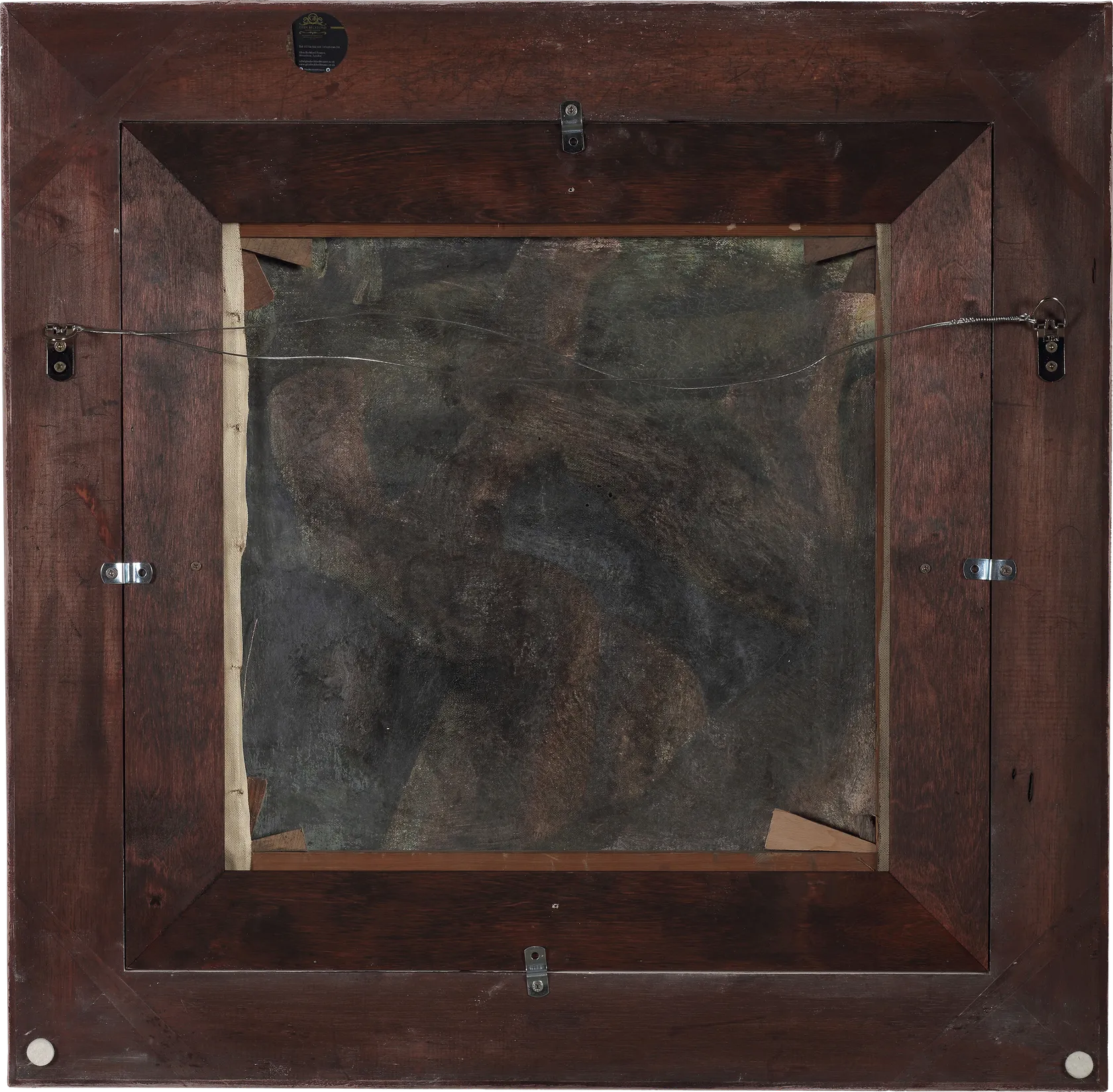
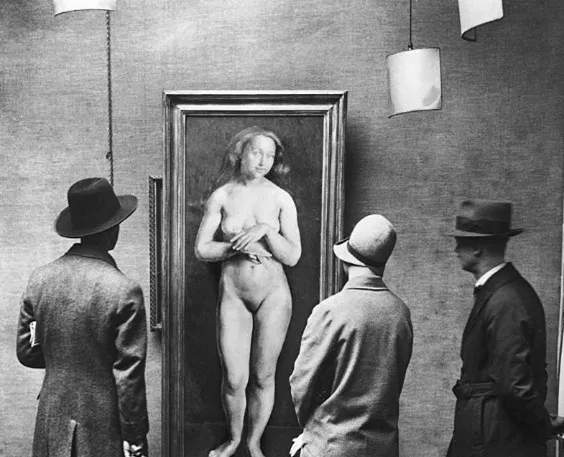
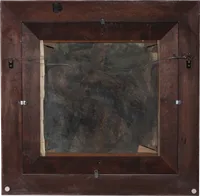
That scrutiny became controversy in 1929, when her painting Virginal – depicting the same model as the present work – was refused by the Royal Academy on grounds of nudity, a decision widely reported in the press [fig. 2]. Later that year, the painting was exhibited at the Leicester Galleries, London, where it appeared alongside another nude of the same sitter, Summer Bed Time [fig. 3].[2] Contemporary coverage noted that the model was a girl of sixteen who had posed for both works. The inscription, ‘Gwendoline’, written on the reverse of the stretcher of this work, confirms her identity. Her repeated presence in Procter’s studio at precisely the moment of the artist’s greatest public visibility suggests that she was central to Procter’s evolving conception of the modern nude.
[1] Dod Procter quoted in, ‘Dod Procter’, The National Portrait Gallery. [Available via: https://www.npg.org.uk/collections/search/person/mp16178/doris-margaret-dod-procter-nee-shaw?utm]
[2] The Sketch. Wednesday 11 December 1929.