Enquire
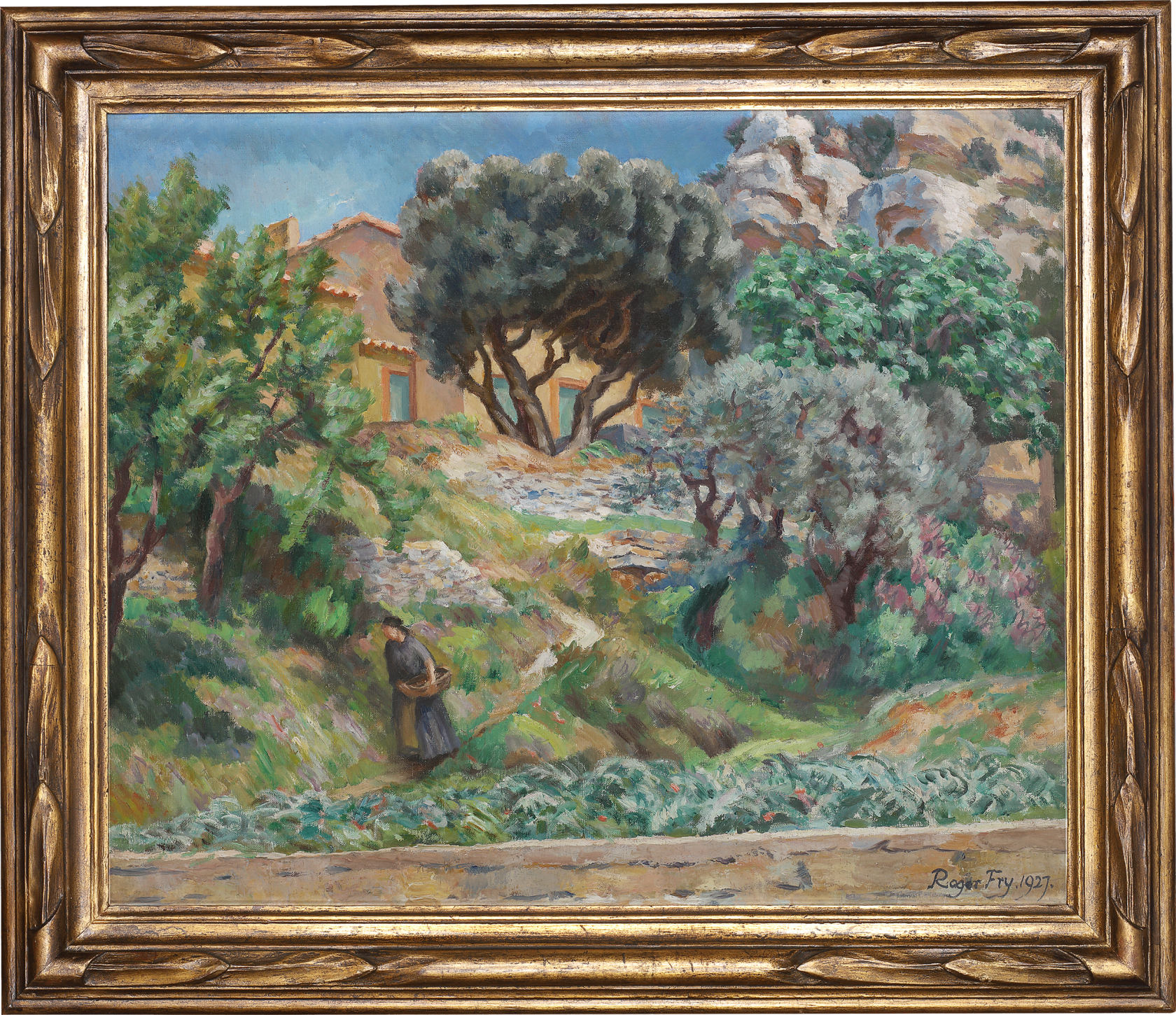
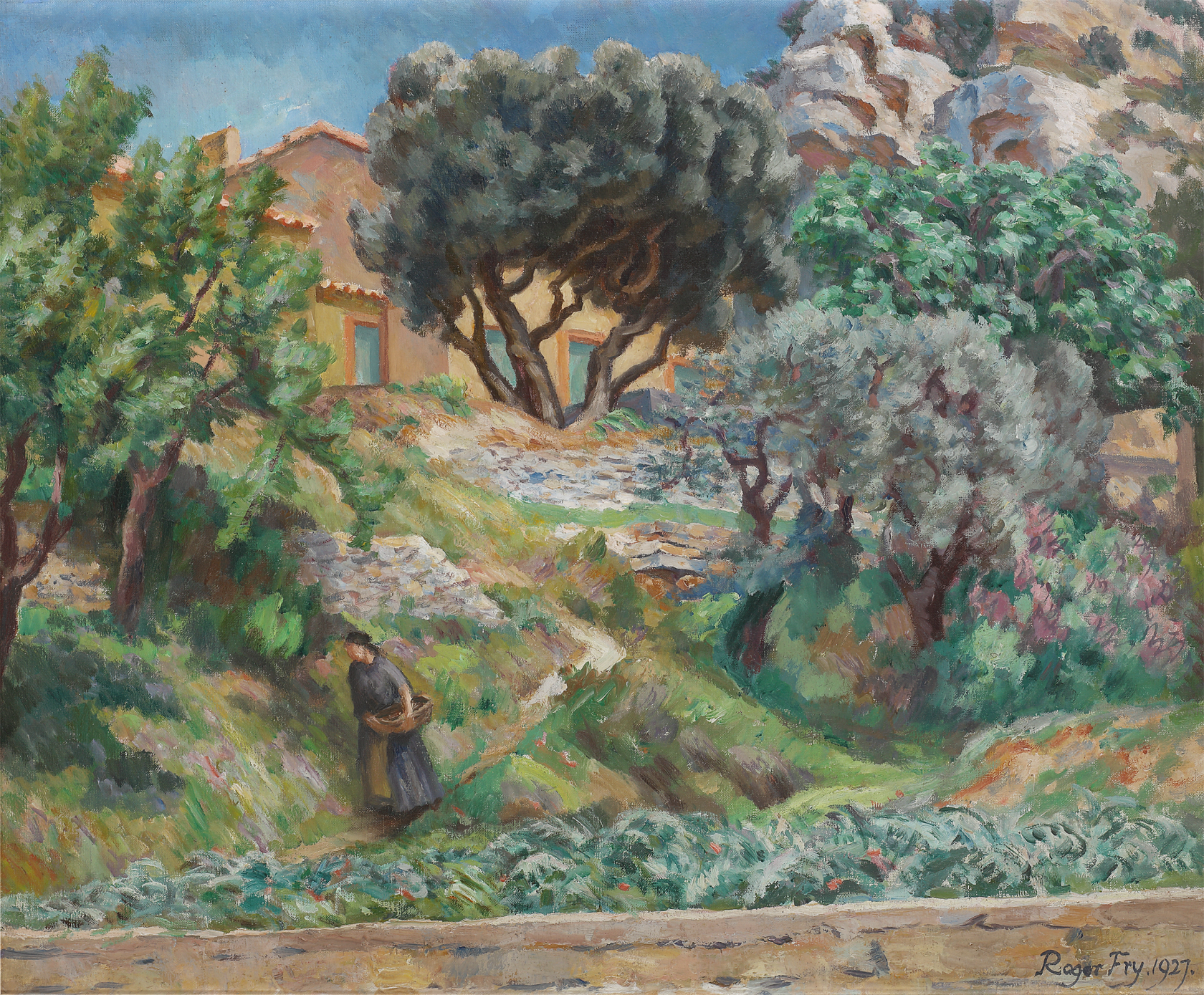
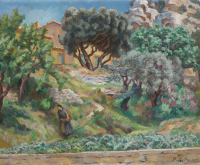
Roger Fry’s sweeping landscape is a lyrical reminder of the influence of French art on painting in Britain in the early twentieth century. Splitting his time between Britain and France, Fry introduced a generation of British artists to the avant-garde modernist movements which had proliferated across the continent in the early twentieth century.
In 1927, Fry published his Cezanne: A Study of his Development, which was the culmination of years of academic study and admiration of the artist’s life and work. Throughout the book, Fry emphasises Cézanne's pioneering exploration of form and colour, paying particular attention to his revolutionary approach to representing nature and space including the use of geometric shapes, planes, and his distinctive treatment of light and shadow. Cézanne's profound impact on Fry’s work is marked, particularly in the present painting. It is painted with thick and truncated stokes of paint, employing Cezanne’s geometric shapes and planes to carve the rustic landscape. However, Fry maintains the solidity of...
Roger Fry’s sweeping landscape is a lyrical reminder of the influence of French art on painting in Britain in the early twentieth century. Splitting his time between Britain and France, Fry introduced a generation of British artists to the avant-garde modernist movements which had proliferated across the continent in the early twentieth century.
In 1927, Fry published his Cezanne: A Study of his Development, which was the culmination of years of academic study and admiration of the artist’s life and work. Throughout the book, Fry emphasises Cézanne's pioneering exploration of form and colour, paying particular attention to his revolutionary approach to representing nature and space including the use of geometric shapes, planes, and his distinctive treatment of light and shadow. Cézanne's profound impact on Fry’s work is marked, particularly in the present painting. It is painted with thick and truncated stokes of paint, employing Cezanne’s geometric shapes and planes to carve the rustic landscape. However, Fry maintains the solidity of his distinctive figure in the foreground of this landscape, whose rounded forms contrast the sharper geometry of the surrounding planes.
Fry visited St-Rémy throughout the 1920s before buying a farmhouse, Mas d’Angirany, on the Route d’Antiques leading out of St Remy-de-Provence in 1931 with his friends, the writer and poet Marie Mauron and her husband Charles Mauron, the French translator of English authors including E. M. Forster and Virginia Woolf. The area drew artists from all over Europe, including Vincent Van Gogh, whose painting Ravine, painted shortly after his arrival at the Saint-Paul asylum in 1889, depicts the rugged landscape of a nearby ravine in St-Rémy.
This artwork belonged to twentieth-century art collector Benjamin Wyndham Theodore Vint's, whose distinguished collection was exhibited in numerous public collections throughout the 1930s, 40s and 50s, including Public Art Galleries Brighton, Aberdeen Art Gallery and Whitechapel Art Gallery.[1]
[1] Vint’s collection included works by Maurice de Vlaminck, Augustus John, David Bomberg, William Orpen and Nina Hamnett.